The Calculator Den Blog
Practical money and everyday-maths articles that answer a real question, then hand you the calculator that does the work. No fluff, no filler.
 Fitness
How to calculate body fat percentage
You do not need a lab. A tape measure and the US Navy formula give a solid estimate in two minutes. Here is the method, a worked example, and what the number actually means.
 Math
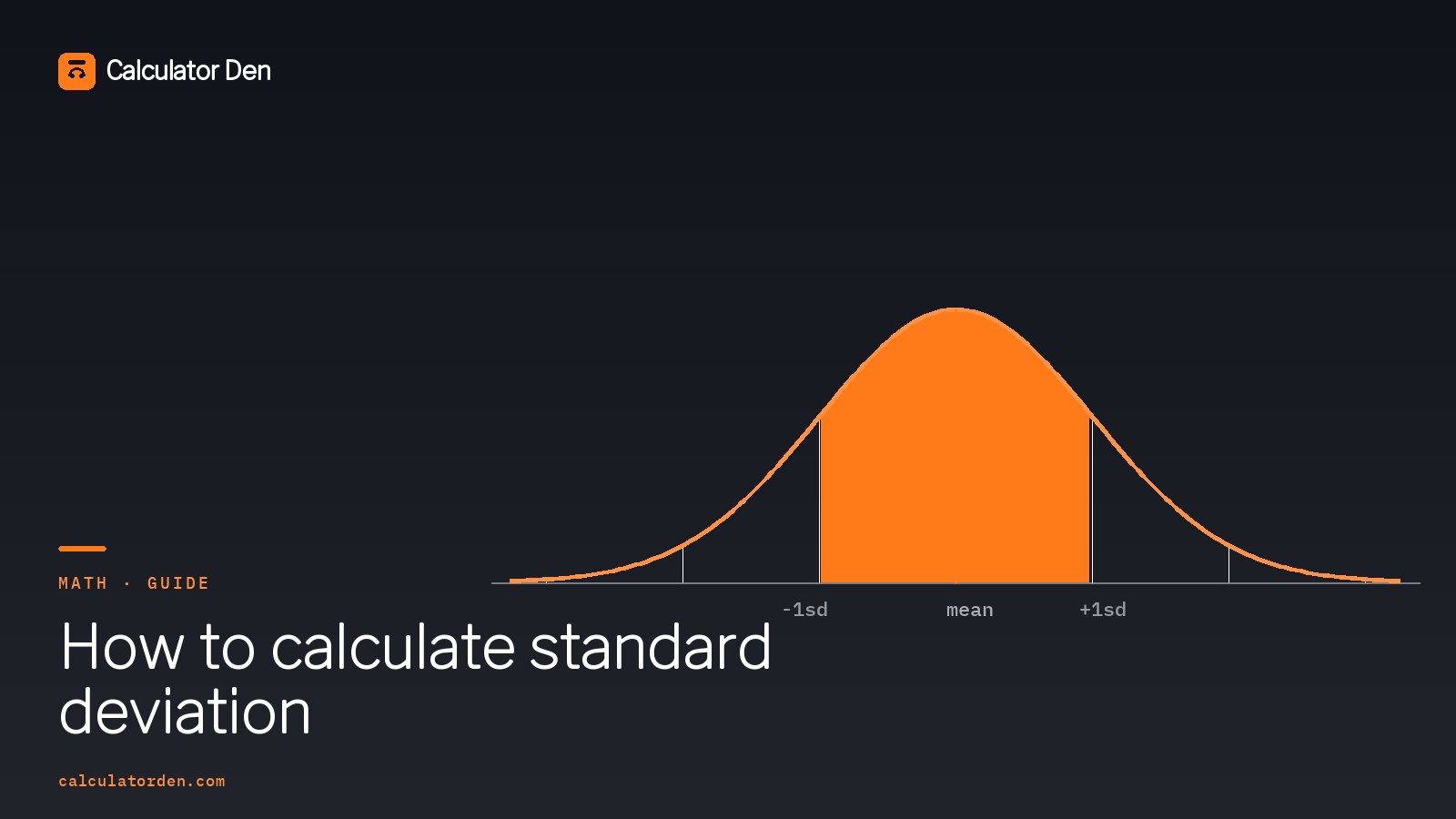
MathHow to calculate standard deviation
Standard deviation measures how spread out your data is. Here is the five-step method, a full worked example, and the one choice (population vs sample) that trips most people up.
 Health
How is my due date calculated?
Most due dates come from one simple sum: 280 days from the first day of your last period. Here is the exact method, a worked example, and how ultrasound, conception and IVF dating change the answer.
 Science
Ohm's law explained (V = IR)
Ohm's law ties together the three things every circuit has: voltage, current and resistance. Learn the formula, the triangle trick, and how to find any one value when you know the other two.
 Finance
How much should you save for Christmas?
The trick is not a magic number, it is starting early and saving a little each month. Here is how to work out your Christmas total and turn it into a painless monthly amount.
 Finance
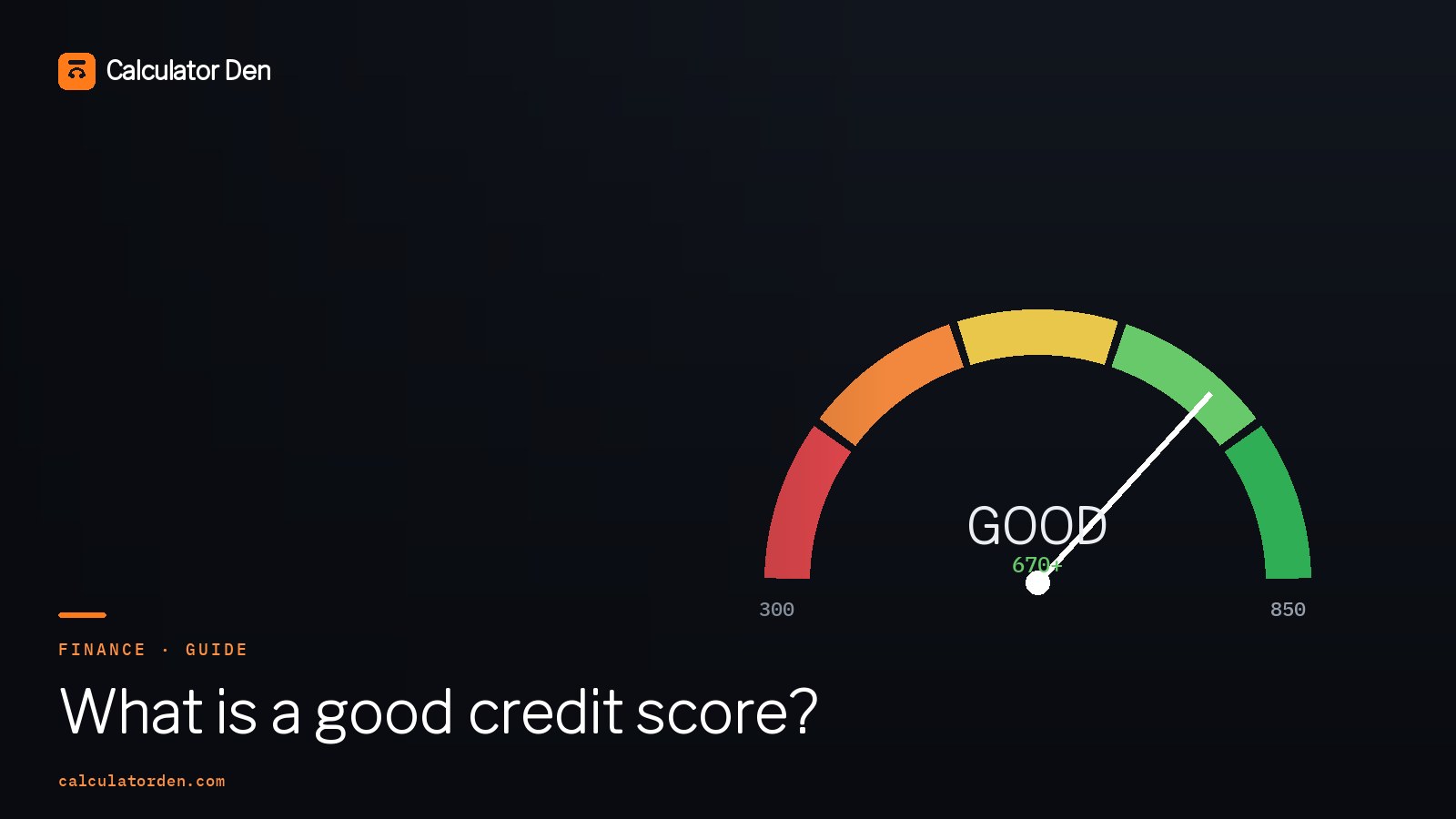
What is a good credit score?
A good score depends on where you live and which scale is used. Here are the ranges by country, what actually moves your number, and the myths to ignore.
 Health
How to read a nutrition label
The numbers on a food label only help if you read them in the right order. Here is how to make sense of serving sizes, calories, the %DV and the ingredient list in under a minute.
 Education
How to study effectively
Most study advice is generic, and some of it is actively wrong. Here are the techniques cognitive science says really work, the popular ones that waste your time, and a plan to put them together.
 Everyday
How to calculate the number of days between two dates
Subtracting one date from another sounds easy until the off-by-one question appears. Here is how to count the days correctly, by hand or by calculator, with the traps that catch people out.
 Science
How to calculate density
Density is just mass divided by volume, but the units and the rearranging are what trip people up. Here is the formula, worked examples both ways, and a chart of common materials.
 Everyday
Roman numerals explained
They look cryptic, but Roman numerals run on just seven letters and two simple rules. Here is how to read and write any of them, with a chart and worked examples.
 Fitness
How to calculate your macros
Counting macros sounds complicated, but it is three steps and a little arithmetic. Here is exactly how to turn a calorie target into daily protein, carb and fat grams, with a worked example.
 Math
MathThe Pythagorean theorem explained
Three letters, one of the most useful rules in all of math. Here is what a² + b² = c² means, how to use it both ways, and where it quietly shows up in real life.
 Education
What grade do I need on my final?
There is one simple formula that tells you exactly what to score on your final to land the grade you want. Here it is, with worked examples for passing and for an A.
 Health
How much sleep do you need?
Eight hours is a rule of thumb, not a rule. Here is what the research actually recommends by age, and how to work out the bedtime that leaves you rested.
 Finance
What is a good net worth by age?
Averages make everyone feel behind. Here are the honest median benchmarks by age, the simple salary-multiple targets, and the numbers that actually matter.
 Finance
How much house can you afford?
A quick rule gets you close, but your real budget depends on your debts, your down payment and the costs people forget. Here is how to find your number.
 Finance
How much should you spend on rent?
The 30% rule is a decent starting point, but your real number depends on the rest of your budget. Here is how to find it.
 Finance
How much car can you really afford?
The price on the windscreen is the smallest part of the story. Here is how to budget for the payment and everything that comes after it.
 Finance
How much should you have saved for retirement by age?
Rough milestones by age, and why the amount matters less than when you start.
 Health
How many calories should you eat to lose weight?
Weight loss comes down to a calorie deficit. Here is how to find your number and a safe pace to aim for.
 Finance
How to pay off debt faster
A clear plan beats willpower. Here are the two methods that work, and why even small extra payments go a long way.
 Everyday
How to save money on fuel
Fuel is one of the easiest running costs to trim. Small habits add up to real money over a year.
 Finance
How compound interest works, and why starting early wins
Compound interest is the quiet engine behind almost every savings and investing story. Understand it once and the maths of money gets a lot clearer.
 Math
MathHow to work out any percentage
Nearly every percentage question is one of three sums. Learn the three and you can do most of them in your head.
 Finance
15-year vs 30-year mortgage: which should you choose?
The shorter term saves a fortune in interest; the longer one keeps the monthly payment low. Here is how to decide which trade suits you.
 Finance
APR vs interest rate: what is the real difference?
Two loans with the same interest rate can cost very different amounts. The APR is the number that tells you which is really cheaper.
 Health
Is BMI actually accurate?
BMI is a fast, useful screen for populations, but a blunt tool for individuals. Here is what it does and does not tell you.
 Everyday
How to split a bill and tip without the awkward maths
The end-of-meal maths does not have to be awkward. Here is the quick way to tip and split a bill fairly.
 Finance
How much should you have in an emergency fund?
The classic answer is three to six months of expenses. Here is how to turn that into your own number, and how to get there.
 Finance
The 50/30/20 budget rule explained
One of the simplest budgets there is: split your take-home pay three ways and let the percentages do the work.
 Health
How much protein do you need per day?
The baseline is smaller than fitness culture suggests, but your goal can push it higher. Here is how to find your number.
 Health
How much water should you drink a day?
The famous eight glasses is a myth. The honest answer depends on your body, your activity and your climate.
 Education
How to calculate your GPA
Your GPA is simply a credit-weighted average of your grades. Here is the exact method, a full worked example, and how to handle percentages and different grading scales.
 Fitness
Target heart rate by age
Train too easy and you waste the session; too hard and you cannot keep it up. Your target heart rate zone is the sweet spot, and it is set almost entirely by your age.